
Understanding Type 2 Diabetes: Causes, Symptoms, and Management
Type 2 diabetes is one of the most common chronic health conditions affecting millions of people worldwide. Unlike type 1 diabetes, which typically develops early in life and is caused by the immune system destroying insulin-producing cells, type 2 diabetes is often linked to lifestyle factors, genetics, and aging. It occurs when the body becomes resistant to insulin or does not produce enough insulin to maintain normal blood sugar levels.
SYMPTOMS OF TYPE 2 DIABETES
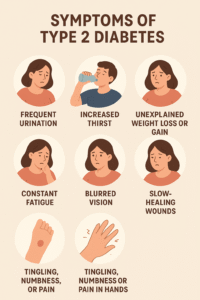
Frequent urination (especially at night)
Increased thirst and dry mouth
Unexplained weight loss or gain
Constant fatigue or lack of energy
Blurred vision
Slow-healing wounds or frequent infections
Tingling, numbness, or pain in the hands and feet
Lifestyle Modifications

Focus on whole grains, vegetables, lean proteins, nuts, and foods low in sugar.

At least 30 minutes of physical activity, such as walking, swimming, or cycling, most days of the week.

Losing even 5–10% of body weight can significantly improve insulin sensitivity.

These habits worsen complications.
1. Focus on whole grains, vegetables, lean proteins, nuts, and foods low in sugar.
1. Whole Grains – Whole grains like brown rice, oats, quinoa, barley, and whole wheat contain essential fiber, vitamins, and minerals. Fiber helps regulate blood sugar, improves digestion, and keeps you feeling full for longer. Replacing refined grains with whole grains can lower the risk of heart disease and diabetes.
2. Vegetables – Vegetables are rich in vitamins, minerals, antioxidants, and fiber. Incorporating a variety of colorful vegetables—like spinach, carrots, broccoli, peppers, and kale—ensures your body receives a range of nutrients while maintaining a low-calorie intake. Vegetables also support healthy digestion and strengthen immunity.
3. Lean Proteins – Lean proteins such as chicken, turkey, fish, tofu, lentils, and eggs provide essential amino acids needed for muscle repair, hormone production, and overall growth. Choosing lean options over fatty meats reduces cholesterol levels and promotes heart health.
4. Nuts – Nuts like almonds, walnuts, pistachios, and cashews are packed with healthy fats, protein, and antioxidants. They help control blood sugar levels, improve heart health, and provide a nutritious snack alternative to processed, sugary foods. Moderation is key, as nuts are calorie-dense.
5. Low-Sugar Foods – Minimizing added sugar in your diet prevents blood sugar spikes, weight gain, and reduces the risk of chronic diseases. Focus on natural sugar sources like fruits, and avoid sugary drinks, candies, pastries, and processed snacks.
2. At least 30 minutes of physical activity, such as walking, swimming, or cycling, most days of the week.
The Importance of Regular Physical Activity – Engaging in at least 30 minutes of physical activity, such as walking, swimming, or cycling, most days of the week, is essential for maintaining overall health and well-being. Regular exercise not only strengthens the body but also improves mood, boosts energy, and helps prevent chronic diseases.
Tips to Incorporate Physical Activity Daily –
Start with short sessions and gradually increase duration and intensity.
Choose activities you enjoy to stay consistent, like dancing, hiking, or swimming.
Make it a family activity to encourage a healthy lifestyle for everyone.
Use tools like step counters or fitness apps to track your progress.
3. Losing even 5–10% of body weight can significantly improve insulin sensitivity.
The Impact of Weight Loss on Insulin Sensitivity – Even a modest weight loss of 5–10% of body weight can have a powerful effect on overall health, particularly in improving insulin sensitivity. Insulin sensitivity refers to how effectively your body uses insulin to manage blood sugar levels. Enhanced insulin sensitivity helps prevent or manage conditions like type 2 diabetes and metabolic syndrome.
Benefits of Losing 5–10% of Body Weight
Improves Blood Sugar Control
Weight loss reduces insulin resistance, making it easier for the body to regulate blood glucose.
Helps stabilize energy levels throughout the day and reduces the risk of diabetes complications.
Reduces Risk of Heart Disease
Lower body weight can decrease blood pressure and cholesterol levels.
Supports overall cardiovascular health and reduces strain on the heart.
Enhances Metabolic Health
Promotes better fat metabolism and reduces visceral fat around organs.
Helps maintain healthy liver function and prevents fatty liver disease.
Supports Joint Health and Mobility
Reduced body weight decreases stress on knees, hips, and back.
Improves mobility and reduces pain associated with excess weight.
Boosts Overall Well-Being
Even small weight loss can enhance confidence, mood, and energy levels.
Encourages the adoption of healthier lifestyle habits for long-term benefits.
Tips for Achieving 5–10% Weight Loss
Balanced Diet: Focus on whole grains, vegetables, lean proteins, and low-sugar foods.
Regular Exercise: At least 30 minutes of moderate activity most days of the week.
Portion Control: Monitor serving sizes and avoid overeating.
Consistent Lifestyle Changes: Small, sustainable changes are more effective than extreme diets.
Monitor Progress: Keep track of weight, activity, and dietary habits to stay motivated.
4. These habits worsen complications.
Habits That Worsen Health Complications – Certain lifestyle habits can worsen existing health conditions and increase the risk of complications, particularly for people with chronic illnesses like diabetes, heart disease, or obesity. Understanding and avoiding these habits is essential for maintaining long-term health and preventing serious consequences.
Key Habits That Can Worsen Complications
Poor Diet Choices
Frequent consumption of sugary foods, processed snacks, and refined carbohydrates spikes blood sugar levels.
Excessive intake of unhealthy fats can raise cholesterol and increase heart disease risk.
Physical Inactivity
A sedentary lifestyle reduces insulin sensitivity and slows metabolism.
Lack of exercise contributes to weight gain, weak muscles, and poor cardiovascular health.
Smoking and Excessive Alcohol Consumption
Smoking damages blood vessels and increases the risk of heart disease, stroke, and nerve damage.
Excess alcohol intake affects liver function, blood sugar levels, and overall metabolic health.
Ignoring Medical Advice
Skipping medications, check-ups, or lab tests can lead to uncontrolled conditions.
Delayed treatment may result in serious complications like kidney damage, neuropathy, or heart problems.
Chronic Stress and Poor Sleep
Persistent stress raises cortisol levels, increasing blood sugar and blood pressure.
Insufficient sleep affects metabolism, weight management, and mental health.
Neglecting Hydration and Hygiene
Dehydration can impact kidney function and blood sugar control.
Poor hygiene increases the risk of infections, particularly in individuals with weakened immunity.
Causes and Risk Factors
Type 2 diabetes develops over time and is often linked to lifestyle and genetic factors. Key contributors include:
Unhealthy Diet: High intake of sugary foods, processed meals, and unhealthy fats.
Obesity and Overweight: Excess body fat, especially around the abdomen, increases insulin resistance.
Sedentary Lifestyle: Lack of physical activity reduces the body’s ability to use insulin effectively.
Family History and Genetics: Having a parent or sibling with diabetes increases risk.
Age and Ethnicity: Risk rises after 40, and some ethnic groups, such as South Asians and African Americans, are more prone.
Symptoms to Watch For
Type 2 diabetes often develops gradually, and some people may not notice symptoms initially. Common signs include:
Frequent urination and excessive thirst
Increased hunger, especially after meals
Unexplained weight loss or gain
Fatigue and irritability
Blurred vision
Slow-healing wounds or frequent infections
Management and Treatment
While type 2 diabetes cannot be cured, it can be effectively managed with lifestyle changes and medication:
Healthy Diet: Focus on vegetables, whole grains, lean proteins, and low-glycemic foods.
Regular Exercise: At least 150 minutes of moderate activity weekly.
Weight Management: Achieving a healthy weight can significantly improve insulin sensitivity.
Medication: Oral medicines or insulin therapy may be prescribed to control blood sugar.
Regular Monitoring: Track blood glucose levels and maintain routine doctor visits.